

Handicap parking permit for pregnancy: HandicapMD launches national guide on disabled placards for pregnant women
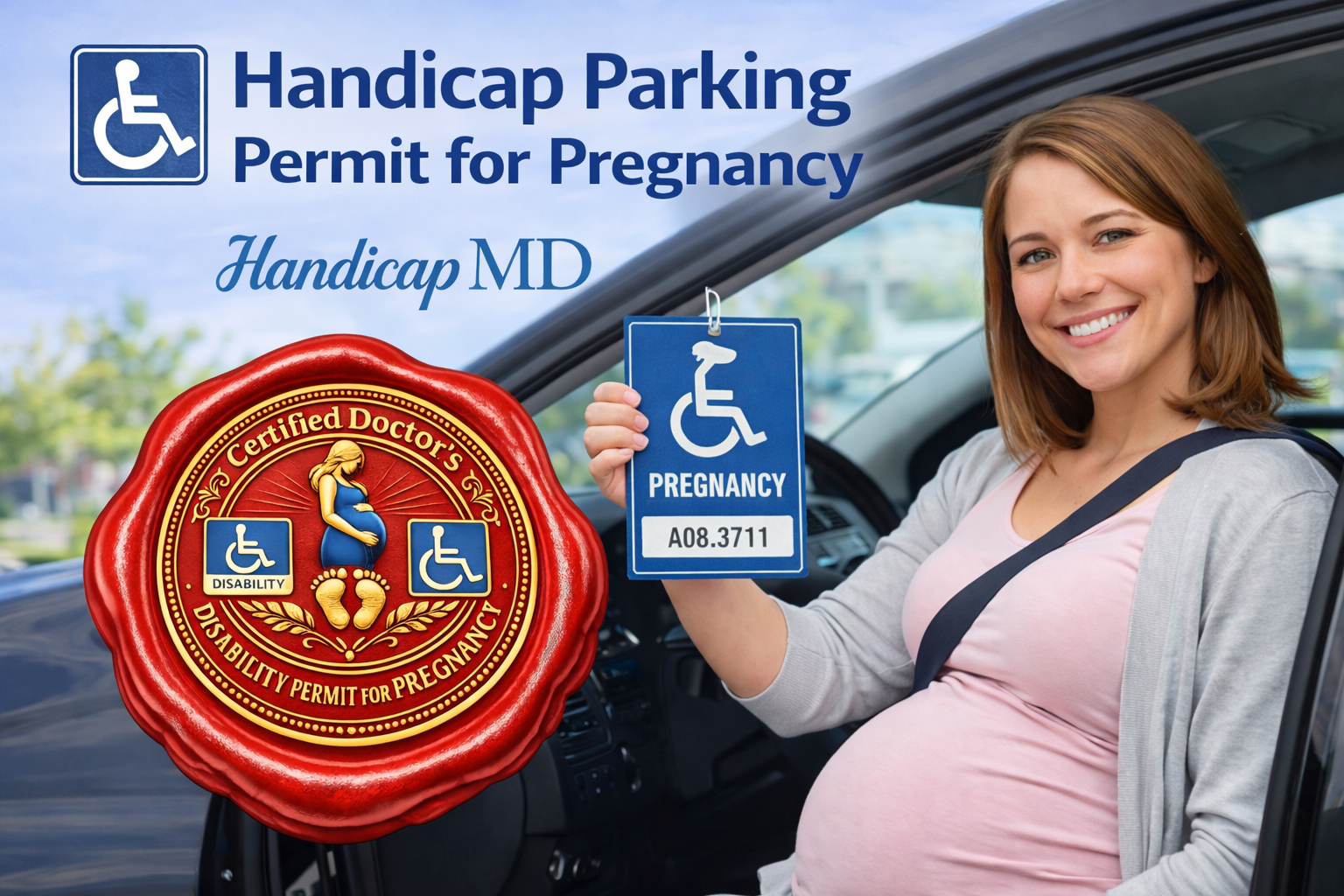
handicap parking permit for pregnancy - pregmant women
handicap parking permit for pregnancy - pregmant women in the us
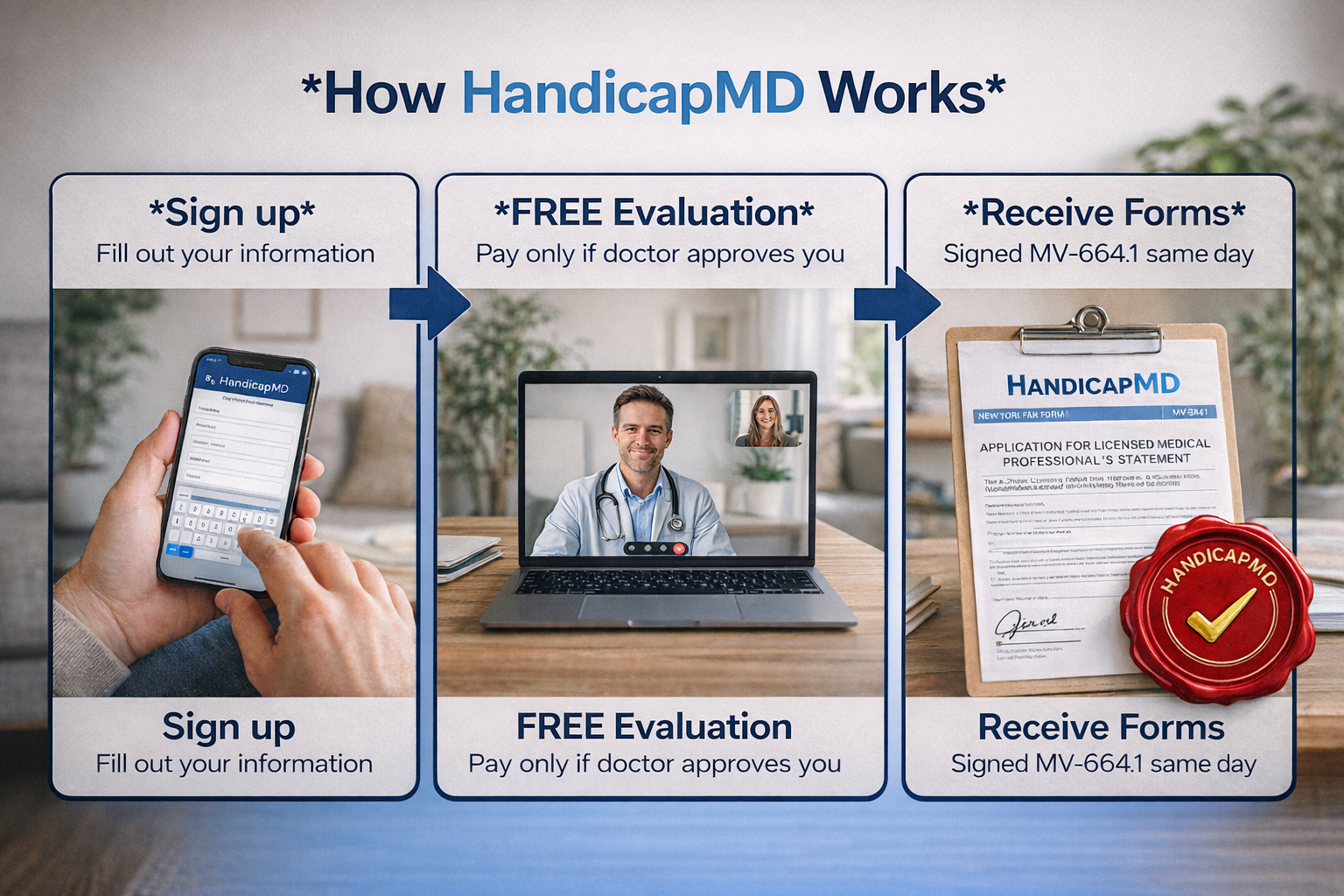
handicapmd
handicap parking permit for pregnant women

handicap parking permit for pregnant expectant mothers
New educational resource about pregnancy complications may qualify for a temporary handicap permit, state rules, and the medical certification process online
The new guide was created to answer one of the most common and misunderstood questions in disability parking: Can pregnancy qualify for a temporary handicap parking permit? The answer is that pregnancy alone does not automatically qualify everywhere, but pregnancy-related medical complications or functional limitations may qualify in many situations when they substantially impair mobility, breathing, endurance, or safe ambulation and a licensed clinician certifies that the patient meets the state’s eligibility standard. State agencies commonly offer temporary placards for short-term disabilities, and several states expressly allow temporary permits tied to qualifying mobility limitations. California’s DMV states that temporary disabled parking placards are available for temporary disabilities for up to 180 days or the shorter clinician-certified period, while New York allows a temporary permit for up to six months for a temporarily disabling condition. Florida separately offers both temporary disabled parking permits for short-term mobility impairments and a distinct Expectant Mother Temporary Parking Permit form.
HandicapMD says the guide is designed to be practical, medically grounded, and useful for real women dealing with difficult pregnancies, postpartum recovery, or serious symptoms that make getting from a parking lot to an office, pharmacy, imaging center, or hospital genuinely hard.
“Pregnancy can be physically demanding even under normal circumstances, but some women develop complications that make walking long distances, standing for extended periods, or moving safely from place to place much harder,” said Dr. Eric Jackson-Scott, MD, MPH, of HandicapMD. “Our goal with this national guide is to help women understand that the key issue is not simply being pregnant. The real question is whether a pregnancy-related condition is creating a medically supportable functional limitation that matches state temporary handicap placard criteria. We want patients to have accurate information, not myths, and a simple online path to connect with a licensed clinician when appropriate.”
The guide focuses on the principle that eligibility is functional, not purely diagnostic. In other words, a diagnosis by itself may not be enough. What matters is how the condition affects mobility and safe daily functioning. Many state forms and DMVs look at whether a person is unable to walk a certain distance without stopping, requires an assistive device, uses portable oxygen, has qualifying cardiac or respiratory limitations, or has another medical condition that severely limits walking. California’s official form states that a person may qualify if they have impaired mobility, cannot move without an assistive device, or have specific cardiovascular or respiratory illnesses that substantially impair mobility. New York’s form includes examples such as inability to walk 200 feet without stopping, use of portable oxygen, Class III or IV cardiac condition, severe lung disease, or severe mobility limitation due to arthritic, neurological, or orthopedic conditions. Florida’s disability certification form uses similar standards, including inability to walk 200 feet without rest, use of an assistive device, wheelchair dependence, oxygen use, severe cardiac limitation, severe lung disease, or severe walking limitation due to arthritic, neurological, or orthopedic conditions.
According to HandicapMD, that means some pregnant women may qualify for a temporary handicap parking permit during pregnancy when a clinician documents that the pregnancy has led to a qualifying degree of functional impairment. The national guide discusses examples of conditions that may support evaluation for a temporary permit when symptoms are severe enough and the patient meets state rules. Examples discussed include:
High-risk pregnancy with severe mobility limitation
Severe pelvic girdle pain or symphysis pubis dysfunction causing painful ambulation
Pregnancy-related sciatica or significant low back dysfunction limiting walking tolerance
Severe lower-extremity swelling with impaired mobility
Preeclampsia or other serious hypertensive disorders when they contribute to significant activity restriction or unsafe ambulation
Cardiopulmonary complications causing shortness of breath, reduced endurance, or need for activity limitation
Post-surgical recovery during pregnancy or immediately postpartum, including recovery after medically necessary procedures or complicated delivery when temporary disability parking criteria are met
The release notes that swelling in pregnancy is common and does not automatically qualify by itself. MedlinePlus notes that many women experience swelling during pregnancy, while more severe swelling may signal more serious conditions such as preeclampsia. HandicapMD says this distinction matters because mild or expected pregnancy discomfort is different from a condition that genuinely creates substantial walking limitation or another state-recognized disability standard.
The new resource also highlights an important state-by-state difference that many patients miss. Some states offer only the usual temporary disabled parking placard route for short-term disabilities, while others also have pregnancy-specific or expectant-mother-related pathways. Florida is a prominent example: its official “Application for Expectant Mother Parking Permit” states that an expectant mother temporary parking permit may be issued only to an expectant mother and may be valid for up to one year after issuance. At the same time, Florida also maintains its regular temporary disabled person parking permit system for short-term mobility impairments, generally up to six months, with a fee for the standard temporary permit.
That distinction is one reason HandicapMD says women should not rely on social media advice, informal message boards, or assumptions based on another state’s rules. A woman in California, New York, Florida, Texas, or another state may all be dealing with similar symptoms, yet the paperwork, permit duration, and exact eligibility language may differ.
The guide walks users through the HandicapMD online process for pregnancy-related disability parking evaluations:
First, the patient visits HandicapMD online and starts the intake process. She selects her state, enters basic information, and describes the pregnancy-related symptoms, complications, or functional limitations affecting her mobility.
Second, the patient books or requests an online evaluation with a licensed clinician. HandicapMD emphasizes that this is a medical review process, not automatic approval.
Third, the clinician reviews the patient’s symptoms, medical history, current treatment, and functional limitations, along with any relevant records if available. The clinician’s role is to determine whether the patient appears to meet the applicable state standard for temporary disability parking certification.
Fourth, if medically appropriate, the patient receives the clinician-completed paperwork or certification instructions for the correct state form. The patient then submits the form or follows state-specific filing steps with the DMV or other local issuing authority. HandicapMD notes that the state, not the telehealth platform, is the agency that issues the placard or permit.
Fifth, if the patient does not medically qualify, the clinician should not certify the application. HandicapMD says this is a critical part of maintaining legitimate, standards-based evaluations.
“This is about helping women who are truly struggling with mobility or severe pregnancy-related complications, while also respecting the integrity of the process,” Dr. Jackson-Scott added. “A temporary disability placard is not a convenience pass. It is a mobility accommodation for people who meet the criteria. Our job is to assess, educate, and complete the medical certification when it is clinically justified.”
The company says the guide was intentionally built to rank for high-volume search phrases while still being genuinely informative. Those phrases include handicap parking permit for pregnancy, pregnancy handicap placard, temporary handicap placard while pregnant, disabled parking permit for high-risk pregnancy, can pregnant women get a handicap placard, and how to get a handicap permit during pregnancy. HandicapMD says too much existing content online is either vague, misleading, or not aligned with the actual language used on DMV forms.
To make the guide more useful, HandicapMD includes examples of what patients should be prepared to discuss during an evaluation, such as:
How far they can walk without stopping
Whether they are experiencing severe pelvic pain, instability, or near falls
Whether they need a cane, walker, wheelchair, or help from another person
Whether shortness of breath limits basic walking or stair climbing
Whether swelling, pain, or a cardiac or respiratory issue has significantly reduced safe mobility
Whether the limitation is expected to be temporary and how long it may last
The guide also addresses common misunderstandings. HandicapMD warns that many women assume that because pregnancy is temporary, a permit will be automatically approved. In reality, temporary status alone is not enough. The limitation still has to be medically significant and fit the law of the issuing state. Similarly, having back pain, fatigue, or swollen feet during pregnancy does not guarantee qualification unless those symptoms rise to the level of a qualifying disability under the form used in that jurisdiction.
For women who are postpartum rather than currently pregnant, the guide explains that the same functional approach may still apply. A woman recovering from a complicated delivery, surgery, severe pelvic injury, major anemia with functional limitation, or another short-term but substantial impairment may need temporary disability parking during recovery, depending on state rules and clinician certification.
HandicapMD also emphasizes that a disability parking placard should only be used by or for the eligible patient. California’s application warns that it is illegal to allow someone else to use the placard if the disabled person is not in the vehicle, and the state may impose fines or other penalties for fraud or misuse. The company says patient education on proper use is part of responsible certification.
The new national guide is part of a broader HandicapMD effort to build accessible, state-aligned educational resources for individuals seeking disability parking certification online. The company focuses on helping users understand medical eligibility, reducing form errors, and connecting patients with licensed clinicians for online review when appropriate.
For patients searching online for answers, HandicapMD says the takeaway is simple: pregnancy itself is not the automatic rule, functional limitation is. When a woman’s pregnancy-related medical condition makes walking, breathing, or moving safely substantially harder, she may have grounds to pursue a temporary permit evaluation.
The company believes this matters because the need is often invisible. A pregnant woman dealing with severe pelvic instability, high-risk complications, or cardiopulmonary symptoms may look outwardly fine while struggling through every long parking lot, medical appointment, or pharmacy pickup. By publishing a national guide focused on both search visibility and medical usefulness, HandicapMD aims to close that information gap.
HandicapMD’s new guide now helps women understand:
what a pregnancy handicap placard really is,
when a temporary disability parking permit during pregnancy may be appropriate,
which pregnancy-related complications may support evaluation,
how state rules differ, and
how to start the online medical review process through HandicapMD.
About HandicapMD
HandicapMD is an online platform that connects patients with licensed clinicians for disability parking permit evaluations and related documentation services. The company focuses on education, accessibility, and state-specific guidance so patients can better understand eligibility requirements and next steps. HandicapMD’s process is designed to help users navigate the medical certification portion of a disability parking application while recognizing that final issuance decisions are made by the applicable state or local authority. https://www.handicapmd.com/
Ena Darron
HandicapMD
+1 8333683825
email us here
Visit us on social media:
Instagram
Facebook
YouTube
Handicap Parking Placard for Pregnant Women
Legal Disclaimer:
EIN Presswire provides this news content "as is" without warranty of any kind. We do not accept any responsibility or liability for the accuracy, content, images, videos, licenses, completeness, legality, or reliability of the information contained in this article. If you have any complaints or copyright issues related to this article, kindly contact the author above.
